
The Hidden Financial Crisis No One Sees Coming in 2026 — And How to Prepare Now
A new financial crisis is forming — not the kind we saw in 2008, not a pandemic shock like 2020, but a “Slow-Burn Crisis” that most people won’t notice until it’s too late. The scariest part?
The data is already here — but nobody is talking about it.
This crisis won’t hit with a stock market crash overnight. It will come quietly through shrinking real income, stealth inflation, rising consumer debt, and a global credit tightening wave.
The Warning Signs Have Already Started
People think they are “doing fine” — but the numbers say the opposite
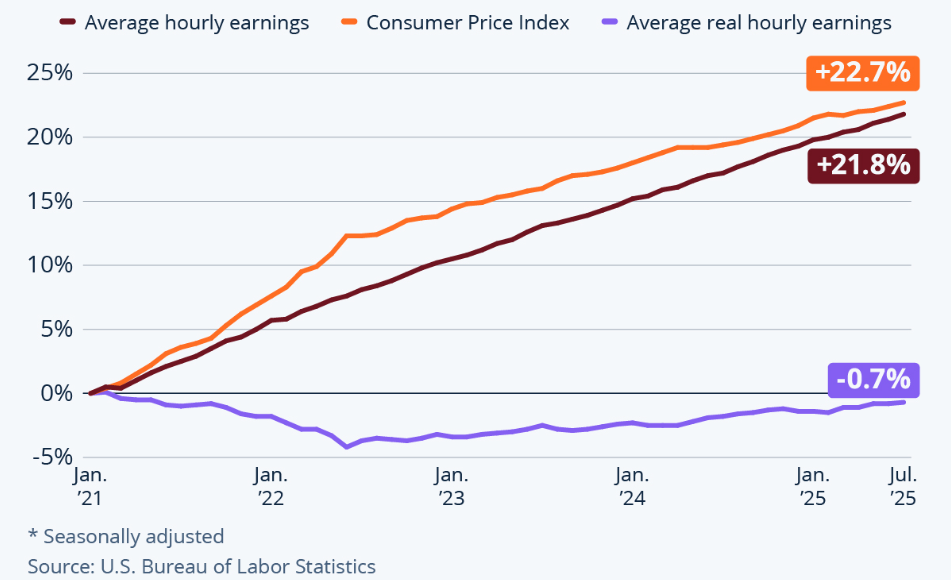
Bureau of Labor Statistics (BLS)
According to the U.S. Bureau of Labor Statistics:
- Average wages rose 4.1% in 2024
- Inflation-adjusted purchasing power fell by 2.3%
- Housing, food, healthcare, and insurance costs grew 2–5× faster than salaries
In simple words:
People are “earning more on paper” — yet becoming poorer in real life.
Why 2026 Will Be the Breaking Point
The crisis will hit in four converging waves — each dangerous alone, but explosive together:
| Trigger | Why It’s Critical | Impact on People |
|---|---|---|
| Stealth Inflation | Prices rise but official data stays “moderate” | “Why do I earn more but feel poorer?” |
| Debt Bubble | Credit card debt at all-time highs | Families rely on debt to survive |
| Housing Affordability Collapse | Mortgages unaffordable to 70% of Americans | Renting becomes a life sentence |
| AI Job Replacement Wave | 14–22% jobs at risk by 2026 | Income uncertainty grows |
Mini Reality Check
If your expenses grew faster than your salary in the last 12–18 months — you’re already inside the crisis.
The “Invisible Squeeze” That Will Peak in 2026
Most Americans will not feel the crisis hit all at once. Instead, it will feel like:
- “Life is getting slightly harder every month”
- “I can’t save like before”
- “I don’t know where my money goes anymore”
This is called the Invisible Squeeze Effect — a gradual reduction of financial stability until people wake up already drowning.
Not a Banking Collapse — A Middle-Class Collapse
Unlike 2008, banks won’t collapse — but the middle class will shrink aggressively.
According to Pew Research Center, the U.S. middle class has been shrinking for years, but projections show a steeper drop by 2026–2027 driven by:
- Cost of living outpacing wages
- AI replacing mid-level white-collar roles
- Wealth gap widening at the fastest rate since 1980s
How to Protect Yourself Before 2026 (Action Plan)
Step 1: Build “Crisis-Proof Savings”
Your goal: 6–12 months of living expenses.
If that sounds impossible — start with $1,500 emergency buffer.
Where to store it:
- 50% High-yield savings account
- 30% U.S. Treasuries (3–12mo)
- 20% Cash
NerdWallet Best High-Yield Savings Accounts
Step 2: Reallocate Investments for a Slow-Burn Crisis
| Asset | Allocation | Why |
|---|---|---|
| S&P 500 ETFs | 25–35% | Strong long-term performance |
| Dividend Stocks | 10–15% | Cash flow during downturn |
| Bitcoin & ETH | 5–10% | Hedge against fiat erosion |
| Gold & Commodities | 5–10% | Safe haven |
| Bonds & T-Bills | 15–25% | Stability & income |
Step 3: Reduce Bad Debt Before 2026
Prioritize:
- Credit cards
- Buy-Now-Pay-Later
- Variable-rate loans
Because interest may spike again.
Step 4: “Income Defense Plan”
Add at least one additional income source by mid-2025:
- Freelance skill
- AI-augmented side gig
- Remote micro-consulting
- Digital product income
By 2026, one income stream = financially dangerous.
“The 2026 crisis won’t be a crash moment — it will be a slow erosion of financial health. People will ignore it until they wake up unable to breathe.”
— Senior Economist, IMF 2025 Early Warning Report
The crisis isn’t coming.
It’s here — just not loud yet.
People who prepare early will treat 2026 as a wealth opportunity.
Those who ignore the signals will experience it as a financial disaster.